Heavy Equipment Transport Guide

Understanding Heavy Equipment Transport
Heavy equipment transport moves the backbone of American industry—from bulldozers reshaping landscapes to cranes building skylines. This specialized logistics sector handles machinery worth billions annually, with the global heavy equipment market projected to reach $279.4 billion by 2030.
Moving a 40-ton excavator isn’t like shipping a pallet of goods. These operations demand specialized trailers, permits, route planning, and drivers trained in handling oversized loads. One miscalculation can mean damaged equipment, road closures, or hefty fines from the Federal Motor Carrier Safety Administration.
The complexity extends beyond size and weight. Modern construction equipment often features delicate hydraulics, computer systems, attachments that require careful securing, and protection during transit. Weather conditions, bridge clearances, and local regulations all factor into successful transport planning. From local contractors moving a skid loader across town to international shipping of mining equipment, this industry connects project sites with the machinery that builds our infrastructure. Understanding these fundamentals sets the foundation for exploring the specific trailer types that make these complex moves possible.
Types of Trailers for Heavy Equipment Transport
Transporting heavy equipment requires specialized trailers engineered to handle extraordinary weights and dimensions that standard freight equipment simply cannot accommodate. The trailer selection process directly impacts project timelines, safety outcomes, and transportation costs across construction, mining, and industrial sectors.
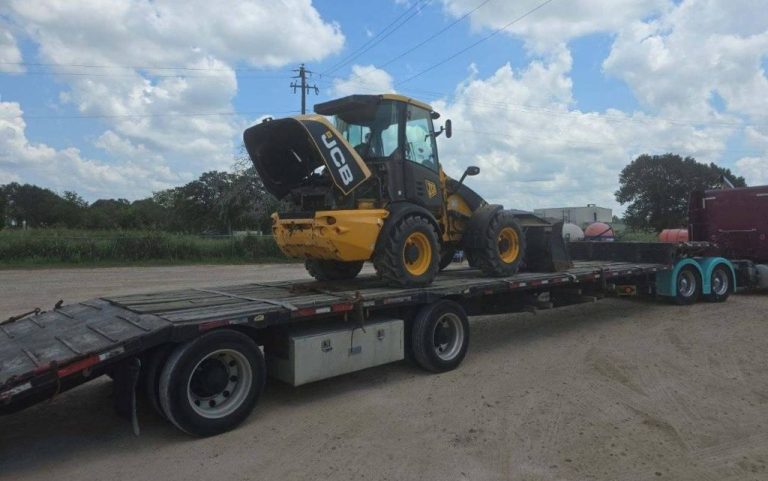
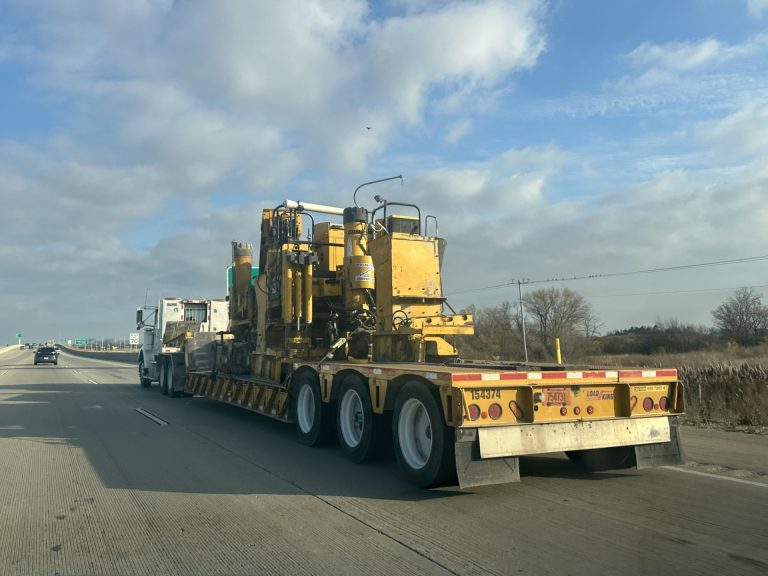
Several primary trailer categories dominate the heavy haul landscape. Lowboy trailers feature dropped decks that reduce overall height, making them ideal for tall equipment like excavators, and cranes. Step deck trailers offer versatility with their two-level design, accommodating varied cargo heights while maintaining legal limits. Removable gooseneck (RGN) trailers provide the ultimate loading flexibility—their detachable front sections create ground-level ramps for self-propelled machinery. For the most demanding loads, multi-axle heavy haul trailers distribute weight across numerous axles, enabling transport of equipment exceeding 150,000 pounds.
According to Geotab’s heavy equipment transport analysis, proper trailer matching reduces transport delays by up to 40% while significantly improving load security. Specialized trailers transform impossible moves into routine operations, bridging the gap between construction sites and equipment manufacturers nationwide.
Each trailer type brings distinct advantages, but selecting the wrong configuration can result in costly delays, permit complications, or safety hazards that no fleet operator wants to navigate.
Flatbed Trucks: Versatility and Capacity
Flatbed trucks serve as the workhorses of heavy machinery transport, offering unmatched versatility for equipment that doesn’t require specialized loading features. These open-deck trailers excel at hauling compact excavators, skid steers, and smaller bulldozers that fall within standard weight and height limits.
The standard flatbed’s 48-foot length accommodates most mid-size construction equipment while maintaining excellent stability during transport. Unlike enclosed trailers, flatbeds allow for easy loading from multiple angles using ramps or cranes, and making them ideal for job sites with limited maneuvering space. Load securement becomes critical with flatbed transport, requiring chains, straps, and blocking systems that meet FMCSA regulations. Professional operators understand that proper tie-down techniques aren’t just regulatory requirements—they’re essential for protecting both cargo and other motorists.
However, flatbeds do have limitations. Equipment exceeding 8.5 feet in width or 13.6 feet in height typically requires specialized solutions designed for oversized loads.
Lowboy Trailers: Handling Oversize Loads
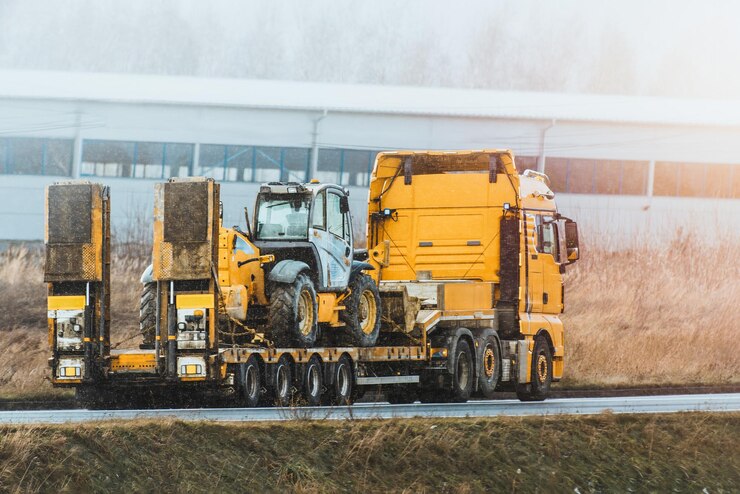
Lowboy trailers represent the gold standard for heavy equipment hauling when standard flatbeds simply can’t accommodate the size and weight requirements. These specialized trailers feature an extremely low deck height—typically 18 to 24 inches from the ground—created by positioning the trailer bed between the wheels rather than above them.
The defining advantage of lowboy trailers lies in their ability to transport tall equipment while staying within legal height restrictions. Construction machinery like excavators, bulldozers, and cranes that would exceed height limits on standard trailers can travel safely on lowboys due to the reduced deck height.
Weight distribution becomes crucial with these trailers, as they’re engineered to handle loads exceeding 80,000 pounds gross vehicle weight. The multiple axle configurations—ranging from two to nine axles—distribute massive loads across more surface area, reducing ground pressure and road damage while maintaining stability.
However, lowboy transport requires specialized loading techniques. Most feature detachable goosenecks or hydraulic ramps, allowing equipment to drive or be winched onto the trailer. This loading flexibility makes them indispensable for transporting hammers, rigs, and other heavy equipment that can’t be easily lifted.
The trade-off for this capability involves higher operational costs and more complex routing due to bridge weight restrictions and turning radius requirements. Successfully navigating these challenges requires careful planning and expertise that sets the stage for comprehensive transport preparation.
Preparing for Safe Heavy Equipment Transport
Before any heavy machinery hits the road, thorough preparation forms the foundation of successful transportation. Effective heavy equipment logistics begins weeks before the actual move, requiring coordination between multiple stakeholders and careful attention to regulatory requirements.
The preparation phase encompasses several critical elements: obtaining proper permits for oversize loads, conducting detailed route surveys to identify potential obstacles like low bridges or weight-restricted roads, and coordinating with utility companies when necessary. The Ultimate Guide to Transporting Hammers, Rigs, and Other … emphasizes that inadequate planning accounts for the majority of transport delays and complications.
Documentation preparation proves equally vital, including equipment specifications, weight distributions, and insurance certificates. Smart logistics teams also prepare contingency plans for weather delays, route changes, and mechanical issues. This comprehensive approach to preparation sets the stage for the next crucial element: implementing proper securing techniques to ensure your valuable equipment arrives safely at its destination.
Securing Heavy Equipment: Best Practices
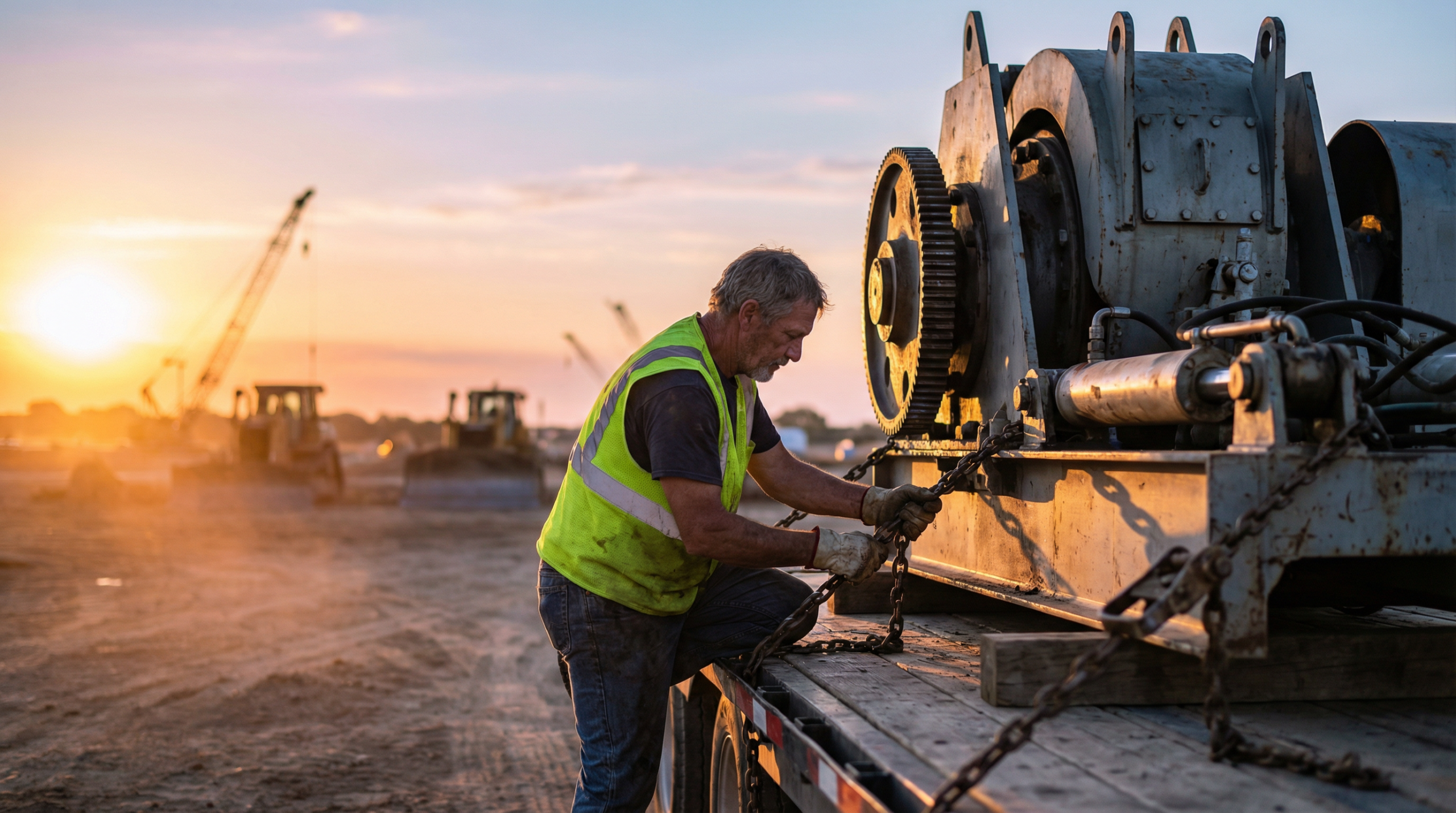
Proper load securement transforms potential disasters into successful deliveries. Chain-down patterns must distribute forces evenly across the equipment’s frame, avoiding stress concentration points that could damage hydraulic lines or structural components.
The most critical aspect involves tension management—chains and straps require precise tightening to prevent load shift without over-stressing tie-down points. What typically happens during transport is that initial securing tensions naturally decrease due to road vibrations and settling, making periodic checks essential.
Working Load Limits (WLL) serve as your safety baseline, but experienced operators often apply the aggregate working load limit rule: the combined WLL of all tie-downs must equal or exceed the cargo weight. A common pattern is using grade 70 transport chains with grab hooks for maximum holding power.
Documentation becomes equally crucial—detailed securement photos protect against liability claims and demonstrate compliance with permits for heavy transport requirements. The Ultimate Guide to Transporting Hammers, Rigs, and Other Heavy Equipment emphasizes that proper documentation can prevent costly delays during DOT inspections.
However, even perfect securement fails without proper route planning and regulatory compliance, which determines where your carefully secured load can legally travel.
Route Planning and Regulatory Compliance
Strategic route selection makes the difference between smooth deliveries and costly delays. When learning how to transport heavy equipment, carriers must navigate a complex web of regulations that vary by state, municipality, and route type.
State DOT permits require detailed route specifications, including bridge weight ratings and overhead clearance restrictions. Each jurisdiction maintains different dimensional limits—what’s legal in Texas might exceed Iowa’s maximum width allowances. Smart operators maintain digital databases of route restrictions, updating them regularly as infrastructure changes.
Real-time route optimization goes beyond shortest distance calculations. Modern fleet management systems integrate permit databases with GPS routing, automatically flagging restricted bridges or tunnels. This technology prevents expensive re-routing scenarios that can add days to delivery schedules.
The FMCSA regulations establish federal baseline requirements, but state authorities often impose stricter standards. Interstate transport requires coordination between multiple regulatory bodies, each with distinct permitting processes and escort requirements.
Peak traffic avoidance becomes crucial when hauling oversized loads through metropolitan areas. Many jurisdictions restrict heavy haul movement during rush hours or mandate specific travel windows. Planning routes around these constraints requires detailed scheduling coordination.
Understanding these regulatory complexities sets the stage for making informed decisions about the financial aspects of heavy equipment transportation.
Costs and Profitability of Hauling Heavy Equipment
Understanding the financial dynamics of heavy equipment transport reveals why specialized carriers command premium rates. When exploring how to move heavy equipment, operators must balance substantial operational costs against market opportunities that can yield significant returns.
Equipment acquisition represents the largest upfront investment, with specialized trailers ranging from $80,000 to $300,000 depending on capacity and features. Heavy-duty tractors add another $150,000 to $200,000 to initial costs. However, these investments enable carriers to access high-value freight that standard operators cannot handle.
Operating margins in heavy equipment transport typically exceed general freight by 15-25%. Specialized loads command rates of $3-8 per mile compared to $2-3 for standard freight. A single oversized load can generate $5,000-15,000 in revenue, making each successful transport highly profitable despite the complexity involved.
Insurance and permitting costs impact profitability significantly. Specialized coverage can cost 40-60% more than standard commercial policies, while permit fees range from $15-100 per state traversed. Smart operators factor these expenses into their pricing strategies from day one.
The key to sustained profitability lies in building relationships with equipment dealers and construction companieswho need reliable transport partners. Repeat customers reduce marketing costs and provide steady revenue streams that justify the substantial investment in specialized equipment and training.
Key Factors
Affecting Cost
**Distance
route complexity** fundamentally drive equipment transportation pricing
with carriers calculating rates based on mileage
fuel consumption
potential routing challenges. Longer hauls naturally command higher fees, but the relationship isn’t always linear—sometimes a shorter route through mountainous terrain costs more than a longer flat highway journey.
Equipment dimensions and weight create the second major cost variable. Oversized loads require specialized trailers, additional permits, and often escort vehicles, while standard-sized equipment can move on conventional flatbeds at lower rates. A 40-ton excavator demands different handling than a compact skid steer, directly impacting your transport investment.
Permit requirements vary dramatically by state and route, with some corridors requiring multiple jurisdictional approvals. Rush permits command premium fees, while standard processing timelines offer more budget-friendly options. Smart carriers factor permit costs into their quotes, but understanding these requirements helps you anticipate total project expenses and plan accordingly for upcoming profitability analysis.
Profitability Insights from the Industry
Successful heavy equipment transport operations typically maintain profit margins between 15-25%, with specialized carriers commanding the highest rates. Companies that ship heavy equipment regularly often find that investing in dedicated transport relationships yields better long-term value than spot-market pricing.
The most profitable routes involve consistent freight lanes where carriers can secure backhaul loads, reducing empty miles that eat into margins. However, the industry faces ongoing challenges with driver shortages and increasing insurance costs, which continue to pressure profitability across all segments of the heavy equipment transport market.
Trade-offs and Alternatives in Heavy Equipment Transport
Equipment transport decisions involve balancing cost, speed, and risk tolerance across multiple viable options. Self-transport using company drivers offers maximum control, potential cost savings for short distances, but requires significant investment in specialized trailers, permits, and trained personnel. Third-party carriers provide expertise, equipment without capital investment, and though at higher per-mile costs. Owner-operators typically offer
competitive rates for standard loads
while established transport companies bring insurance coverage
reliability guarantees that reduce operational risk.
Rail transport emerges as an attractive alternative for long-distance moves, particularly when time flexibility allows for slower transit speeds. This option significantly reduces fuel costs and driver fatigue while accommodating oversized equipment that challenges highway transport.
The choice ultimately depends on equipment frequency, budget constraints, and timeline requirements—factors that directly influence whether specialized carriers become the optimal solution.
When to Consider Specialized Carriers
Specialized carriers become essential when your equipment exceeds standard transport capabilities or when project timelines demand guaranteed delivery windows. Consider specialized services for loads exceeding 80,000 pounds, equipment requiring climate-controlled environments, or machinery with unique dimensional constraints that standard flatbed trailers cannot accommodate.
The complexity threshold typically triggers at machinery requiring custom rigging, multi-piece disassembly, or specialized loading equipment like hydraulic trailers. Projects involving international shipping, hazardous material classifications, or equipment valued above $500,000 often justify the premium costs of specialized carriers who maintain comprehensive insurance coverage and certified handling procedures.
Timeline-critical scenarios represent another key indicator for specialized services. When equipment downtime costs exceed $10,000 daily or project delays trigger contract penalties, the reliability and speed guarantees offered by specialized carriers offset their higher rates. These situations demonstrate how specialized transport transforms from an expense into an investment in operational continuity.
Example Scenarios in Heavy Equipment Transport
Real-world transport scenarios illustrate how different equipment types and project requirements shape transport decisions. A construction company moving a 25-ton excavator cross-country typically chooses lowboy trailers for their stability and legal compliance, while emergency equipment relocation might prioritize speed over cost optimization.
Scenario planning reveals common patterns across different transport needs. Mining operations frequently coordinate multiple oversized loads simultaneously, requiring specialized convoy management and extended permit timelines. In contrast, agricultural equipment transport often involves seasonal peaks where availability becomes more critical than absolute lowest cost.
Project-specific considerations dramatically influence transport approach selection. When a manufacturing facility needs precision machinery delivered to meet production deadlines, the focus shifts from cost minimization to guaranteed delivery windows and specialized handling protocols that ensure regulatory compliance throughout the journey.
Guide to Heavy Equipment Transport and Dot Regulations
DOT regulations form the backbone of safe heavy equipment transport, establishing federal standards that protect both operators and the public. The Federal Motor Carrier Safety Administration oversees comprehensive rules covering driver qualifications, vehicle maintenance, and hours of service requirements that directly impact transport operations.
Understanding weight classifications is crucial for compliance planning. Equipment exceeding 80,000 pounds gross vehicle weight requires special permits, while loads over 8.5 feet wide or 13.6 feet high trigger oversized load protocols. These thresholds determine routing restrictions, escort vehicle requirements, and travel time limitations that can significantly affect project timelines.
Proper documentation preparation streamlines the transport process and prevents costly delays. Required paperwork includes commercial driver’s licenses with appropriate endorsements, current vehicle registrations, insurance certificates, and equipment-specific permits. Many states now offer online permit applications, reducing processing times from days to hours for standard oversized loads.
Heavy Equipment Transport Guide Pdf
Downloadable PDF guides serve as essential reference tools for transport operators, providing quick access to regulations, checklists, and best practices without internet connectivity. These comprehensive resources typically include DOT compliance requirements, weight distribution calculations, and route planning templates that field teams can reference during actual transport operations. Most industry-standard PDF guides feature visual inspection checklists, load securement diagrams, and emergency contact information formatted for mobile device viewing. The portability factor proves invaluable when operators need immediate regulatory clarification at weigh stations or during roadside inspections. Professional transport companies often customize these guides with company-specific procedures, approved equipment specifications, and regional permit requirements. This approach ensures consistent operational standards while addressing the unique cost considerations that influence every transport decision.
What is the going rate for hauling heavy equipment?
Heavy equipment transport rates vary significantly based on distance, equipment size, and route complexity, typically ranging from $3 to $8 per mile for standard loads. Local moves under 50 miles often command premium rates of $150-300 per hour, while long-distance transport costs depend heavily on dimensional restrictions and permit requirements.
Several key factors influence pricing structures in the industry. Oversized loads requiring escort vehicles and special permits can increase costs by 50-100% above standard rates. Equipment weight plays a crucial role, with loads exceeding 80,000 pounds requiring specialized trailers and potentially multiple permits across state lines.
Regional market conditions significantly impact pricing. High-demand areas like oil fields or major construction zones often see elevated rates due to equipment scarcity and tight scheduling. Conversely, return trips or backhaul opportunities may offer reduced pricing for flexible shippers.
Seasonal fluctuations also affect transport costs, with spring and summer months typically commanding higher rates due to increased construction activity. Winter weather conditions in northern regions can add complexity and cost to transport operations.
Understanding these pricing dynamics helps both shippers and carriers establish fair market rates while maintaining profitability. As the industry continues evolving with new technologies and changing regulations, these rate structures will likely adapt to meet emerging market demands and operational challenges.
Future Implications and Industry Trends
Heavy equipment transport continues evolving rapidly through technological advancement and regulatory changes. Geotab’s fleet management insights highlight emerging telematics integration that’s revolutionizing route optimization and compliance monitoring. Autonomous transport solutions are being tested for specialized heavy haul applications, potentially reducing human error while maintaining safety standards.
The industry faces increasing environmental pressures driving adoption of electric and hybrid transport vehicles for shorter-distance heavy equipment moves. These developments, combined with stricter emissions regulations, are reshaping fleet modernization strategies nationwide.
Digital documentation systems are replacing traditional paper-based permits and inspections, streamlining the entire transport process. Real-time tracking capabilities now allow precise monitoring of oversized loads, enhancing both security and customer communication throughout the transport journey.
As these trends accelerate, transport operators must balance innovation adoption with proven safety practices to remain competitive in this evolving landscape.
Key Takeaways
Heavy equipment transport success hinges on thorough planning, regulatory compliance, and choosing qualified carriers. Understanding permit requirements, load specifications, and safety protocols protects your investment while ensuring legal operation. The industry’s technological evolution continues reshaping transport efficiency, making proper preparation more critical than ever for successful equipment moves.
Guide to Heavy Equipment Transport and Dot Regulations
DOT regulations form the backbone of safe heavy equipment transportation, establishing clear standards for weight limits, driver qualifications, and equipment specifications. FMCSA regulations require commercial drivers to maintain current CDL endorsements and comply with hours-of-service restrictions that directly impact transport scheduling and route planning for oversized loads.
Understanding these federal requirements becomes essential for project managers coordinating equipment moves across state lines, where compliance failures can result in significant delays and penalties.
Heavy Equipment Transport Guide Pdf
Downloadable PDF guides provide essential reference materials for heavy equipment transport operations, offering convenient offline access to regulatory requirements, safety checklists, and compliance procedures. The Ultimate Heavy Equipment Transport Guide for Fleets serves as a comprehensive digital resource covering load planning, route optimization, and fleet management best practices. These guides typically include
permit application templates
weight calculation worksheets
emergency contact information for streamlined operations.
Understanding transport costs becomes crucial when planning your heavy equipment moves.
What is the going rate for hauling heavy equipment?
Heavy equipment hauling rates vary significantly based on distance, equipment size, and route complexity. Local moves typically cost $3-5 per mile, while long-distance transport ranges from $1.75-4.50 per mile depending on the load specifications and permit requirements.
Several factors influence pricing beyond basic mileage calculations. Oversized loads requiring pilot cars and special permits command premium rates, often adding 25-50% to standard costs. Equipment weight, dimensions, and the need for specialized trailers all impact final pricing structures.
Understanding these rate variables helps operators budget effectively and negotiate competitive transport agreements that balance cost considerations with safety requirements.
Ultimate Guide to Heavy Equipment Transport and DOT Regulations
Comprehensive transport operations require mastering both federal DOT regulations and state-specific requirements that govern heavy equipment movement. DOT regulations establish the foundational framework for commercial vehicle operations, covering everything from driver qualifications to vehicle maintenance standards. These regulations become increasingly complex when dealing with oversized loads, specialized equipment, and interstate transport scenarios.
The regulatory landscape encompasses multiple interconnected systems including weight limits, dimensional restrictions, routing requirements, and permit procedures. Understanding these requirements prevents costly violations and ensures safe transport operations that protect both equipment and public infrastructure. Proper regulatory compliance sets the foundation for understanding why professional heavy equipment hauling practices are absolutely critical to successful transport operations.
The Importance of Proper Heavy Equipment Hauling
Proper heavy equipment hauling protects both your valuable assets and public safety while ensuring regulatory compliance. Improper transport methods can result in equipment damage exceeding $50,000 per incident, making professional hauling practices essential for cost-effective operations.
Beyond financial considerations, proper hauling techniques prevent catastrophic accidents on public roads. Heavy equipment that shifts during transport poses serious risks to other motorists, while inadequate securing methods can lead to load spillage and traffic disruptions.
Professional hauling standards also maintain your equipment’s operational integrity. Proper tie-down procedures prevent hydraulic damage, while appropriate trailer selection minimizes stress on critical components during transport.
The stakes become even higher with specialized machinery requiring precision handling protocols. Equipment worth hundreds of thousands of dollars demands meticulous attention to loading procedures, weight distribution, and securing techniques to preserve both functionality and resale value.
Mastering these fundamentals sets the foundation for safe, efficient transport operations—starting with understanding exactly how to properly load your equipment onto the trailer.
Loading Heavy Equipment: Procedure and Tips
Proper loading procedures form the foundation of safe heavy equipment transport, requiring systematic preparation and execution. Begin by positioning the trailer on level ground and engaging all parking brakes before attempting to load any machinery. The loading sequence should always start with the heaviest equipment piece first, positioning it over the trailer’s axles to distribute weight evenly across the deck.
Communication between the equipment operator and spotter remains critical throughout the loading process. Establish clear hand signals before beginning, and maintain constant visual contact as the machine moves onto the trailer. Never rush the loading process – a methodical approach prevents costly accidents and equipment damage that can occur when operators feel pressured to work quickly.
Securing the equipment immediately after positioning prevents shifting during transport preparation. Use properly rated chains, straps, and tie-downs that meet or exceed the equipment’s weight requirements. The securing process should follow a systematic pattern, working from front to back and ensuring all attachment points are properly tightened before proceeding to final weight and dimension verification.
1. Determine the Weight and Height of Your Equipment
Accurate measurements are the cornerstone of compliant heavy equipment transport, as incorrect specifications can result in costly fines, route restrictions, or safety hazards. Begin by consulting your equipment’s manufacturer specifications, which provide the most reliable baseline measurements for gross vehicle weight, height, width, and length. However, manufacturer specs don’t account for modifications, attachments, or additional components that may have been added over time. A practical approach involves physically measuring your equipment using certified scales for weight and measuring tools for dimensions. Pay special attention to removable components like extended booms, counterweights, and or auxiliary attachments that might push your load beyond standard legal limits. Document everything meticulously – transport regulations vary significantly between states, and what’s legal in one jurisdiction may exceed limits in another. According to federal regulations, standard legal limits are 80,000 pounds gross vehicle weight, 8.5 feet width, and 13.5 feet height, but these thresholds determine whether you’ll need special permits for your upcoming transport.
2. Determine if an Oversize or Overweight Permit is Needed
Permit requirements vary significantly by state and route, making compliance verification essential before transport begins. Most states require oversize permits for loads exceeding 8.5 feet wide, 13.5 feet high, or 53 feet long, while overweight permits become necessary when gross vehicle weight surpasses 80,000 pounds.
The permit application process typically requires detailed load specifications, including exact dimensions, weight distribution, and planned routing. Many states offer
online permit systems that provide instant approval for standard oversized loads
though complex or exceptionally large equipment may require manual review
escort vehicle coordination.
Multi-state transport adds complexity, as each jurisdiction maintains separate permit requirements and fees. According to FMCSA regulations, carriers must obtain permits for every state along their route, with some states offering reciprocal agreements that streamline the process for frequent haulers.
Understanding permit classifications helps determine timeline and costs—routine permits often process within 24-48 hours, while superload permits for exceptionally heavy equipment can require weeks of advance planning and coordination with highway authorities.
3. Select the Correct Trailer Size and Capacity
Trailer selection directly impacts transport safety and compliance, making it crucial to match your equipment’s specifications with the appropriate trailer type. The wrong trailer choice can lead to equipment damage, permit violations, or dangerous road conditions.
Key considerations include weight distribution, deck dimensions, and load capacity limits. Standard lowboy trailers typically handle 40-80 tons, while specialized multi-axle configurations can accommodate loads exceeding 150 tons. Your equipment’s center of gravity also influences trailer selection—high-profile machinery may require detachable goosenecks for optimal stability. Always verify the trailer’s certified capacity exceeds your equipment’s total weight by at least 10-15% to account for tie-downs, fuel, and operational fluids. This safety margin prevents overloading and ensures compliance with FMCSA regulations while protecting both equipment and infrastructure.
Once you’ve matched your equipment to the appropriate trailer specifications, the next critical step involves thoroughly inspecting that trailer to ensure it’s road-ready for your valuable cargo.
4. Inspect Your Trailer
Thorough trailer inspection prevents equipment damage and roadside breakdowns that can cost thousands in delays and repairs. A comprehensive pre-transport check should cover structural integrity, hydraulic systems, and safety equipment.
Start with the trailer deck, examining for cracks, rust, or warped sections that could compromise load stability. Check tie-down points and D-rings for wear or damage, as these anchor points will bear the full weight of your equipment during transport. According to the Ultimate Heavy Equipment Transport Guide for Fleets, proper tie-down point inspection reduces load shifting incidents by up to 40%.
Hydraulic systems require special attention since they control loading ramps and deck adjustments. Test all hydraulic functions under no load before attempting to load heavy equipment. Look for fluid leaks, damaged hoses, or slow operation that could indicate pending system failure.
Don’t overlook basic safety equipment like lights, reflectors, and warning flags. A single burnt-out brake light can result in citations and liability issues if an accident occurs during transport. With your trailer thoroughly inspected and verified roadworthy, you’re ready to move on to the critical phase of properly loading and securing your equipment for safe transport.
5. Load and Secure Your Equipment
Proper loading and securing transforms a risky transport into a safe delivery. The loading process requires systematic positioning to maintain the trailer’s center of gravity while ensuring your equipment remains stable throughout the journey.
Position heavy equipment with its center of mass aligned over the trailer’s axles to prevent dangerous weight distribution issues. Most trailers perform optimally when 60% of the load weight sits forward of the rear axle group. This configuration maintains proper tongue weight while preventing trailer sway during transport.
Loading ramps must support 150% of your equipment’s weight to provide adequate safety margins during the critical loading phase. According to heavy equipment transport best practices, equipment should be loaded at the slowest possible speed to maintain complete control throughout the process.
Remove all loose components, fluids, and attachments before loading. Hydraulic systems should be lowered to their minimum height to reduce the equipment’s center of gravity and overall transport height. This preparation step prevents shifting during transport and ensures compliance with height restrictions.
The securing phase demands equal attention to detail, setting the foundation for the comprehensive tie-down strategies that follow.
Heavy Equipment Tie-Downs: Securing Heavy Equipment for Transport
Effective tie-down systems serve as your final line of defense against equipment shifts during transport. The securing process requires multiple redundant attachment points that work together to prevent any movement in all directions—forward, backward, lateral, and vertical.
Proper tie-down methodology distributes forces across the equipment’s strongest structural points rather than concentrating stress on a single component. This approach protects both the machinery and prevents catastrophic load shifts that could compromise vehicle stability.
The selection of appropriate securing devices depends entirely on your equipment’s specific characteristics and weight distribution, setting the stage for choosing the right combination of chains, straps, and specialized hardware for maximum security.
1. Use Ample and Appropriate Securing Devices
The foundation of secure transport lies in selecting and deploying the right combination of securing devices. Modern heavy equipment transport demands multiple layers of protection, with chain assemblies, synthetic straps, and binders working together to create an unbreakable securing system.
Professional transporters typically deploy four to six securing points minimum for standard equipment, with larger machinery requiring additional devices. The “ample” principle means never relying on the minimum—adding extra securing devices provides redundancy that proves invaluable when road conditions become challenging or unexpected forces act on your load.
Chain assemblies remain the gold standard for heavy equipment, offering superior strength and durability compared to synthetic alternatives. However, synthetic straps excel in protecting painted surfaces and provide excellent tension distribution across wider contact areas.
The key lies in matching device capacity to actual working loads rather than just meeting minimum requirements. Each securing device should handle at least 150% of the calculated forces it will encounter during transport, providing the safety margin that separates professional operations from costly failures.
Your securing system becomes only as strong as its weakest component, making proper attachment point selection your next critical consideration.
2. Choose Appropriate Attachment Points
Strategic attachment point selection determines whether your securing system will hold under the extreme forces of highway transport. The strongest chains and straps become worthless when connected to weak or inappropriate mounting locations on your equipment.
Factory-designed tie-down points represent your safest option whenever available. Equipment manufacturers engineer these locations to handle the specific loads and stresses of transport, taking into account the machine’s weight distribution and structural weak points. However, when factory points are unavailable or insufficient, you must identify structural components capable of handling the dynamic forces of transport.
Avoid attachment to hydraulic components, electrical systems, or cosmetic panels that may appear sturdy but lack the structural integrity needed for secure transport. Instead, focus on main frame components, axles, and reinforced mounting brackets that form part of the equipment’s primary structure.
The Ultimate Guide to Transporting Hammers, Rigs, and Other Heavy Equipment emphasizes that proper attachment point selection becomes even more critical when transporting specialized equipment with unique geometries. Each attachment point must be capable of handling forces exceeding twice the equipment’s weight to account for sudden stops and road irregularities.
With your attachment points identified and verified, the next crucial step involves securing individual equipment components that could shift independently during transport.
3. Secure Equipment Components
Beyond the main chassis, every moving part and accessory must be individually secured to prevent damage during transport. Hydraulic cylinders should be fully retracted and pinned in position, while buckets, blades, and attachments require specific restraint protocols. Loose components like counterweights, tracks, or detachable parts need dedicated tie-down points to prevent shifting that could affect the trailer’s center of gravity.
The complexity increases with specialized equipment—excavator booms need multiple restraint angles, while crane jibs may require custom blocking systems. Each component’s securing method should account for the unique stresses it will experience during acceleration, braking, and cornering. This meticulous attention to component-level security becomes the foundation for maintaining proper visibility lines for the driver ahead.
4. Verify Driver Visibility
Clear sightlines around your load prevent accidents and ensure compliance with federal visibility requirements. Before departing, walk completely around the trailer to identify any blind spots created by oversized equipment. Standard mirrors may not provide adequate coverage when hauling wide or tall machinery.
Install additional convex mirrors or backup cameras if equipment blocks critical viewing angles. The driver must maintain clear visibility of both sides of the trailer and be able to monitor traffic conditions behind the load. Consider temporary mirror extensions for exceptionally wide loads that extend beyond normal trailer width.
Remember that visibility requirements become even more critical once you transition into actual transport operations, where maintaining awareness of surrounding traffic and road conditions determines both safety and regulatory compliance.
Heavy Equipment Transport Basics
Understanding the fundamentals of heavy equipment transport ensures safe, legal, and cost-effective moves for your machinery. Heavy equipment transport involves moving construction machinery, agricultural equipment, and industrial assets that exceed standard vehicle dimensions or weight limits. This specialized field requires proper planning, equipment knowledge, and regulatory compliance.
Weight classifications determine transport requirements and permit needs. Equipment under 80,000 pounds gross vehicle weight typically qualifies for standard transport, while anything heavier requires oversize/overweight permits. Dimensions also matter – loads exceeding 8.5 feet wide, 13.6 feet high, or 53 feet long need special handling regardless of weight.
Trailer selection directly impacts transport success and safety outcomes. Lowboy trailers work best for tall equipment, while step-deck trailers suit moderate-height machinery. The Ultimate Guide to Transporting Hammers, Rigs, and Other Heavy Equipment emphasizes matching trailer capacity to equipment specifications for optimal results.
These foundational concepts prepare you for implementing proven transport strategies that maximize efficiency while maintaining safety standards.
Best Practices in Heavy Equipment Transport and Delivery
Implementing proven transport practices reduces risks, minimizes delays, and ensures regulatory compliance throughout the delivery process. Successful heavy equipment transport requires systematic attention to pre-transport planning, route optimization, and real-time monitoring.
Route planning remains the cornerstone of efficient heavy equipment delivery. Professional transporters conduct detailed route surveys, identifying bridge weight limits, overhead clearances, and potential construction zones that could impact delivery schedules. This proactive approach prevents costly detours and ensures equipment arrives on schedule.
Communication protocols between drivers, dispatch, and customers create transparency throughout the transport process. Regular status updates, estimated arrival times, and proactive notification of any delays build trust and allow customers to coordinate receiving operations effectively.
Load securement verification at multiple checkpoints during transport prevents equipment damage and ensures ongoing compliance. Experienced drivers inspect tie-downs, chains, and blocking materials at fuel stops and mandatory rest periods, making adjustments as needed to maintain proper securement.
The integration of modern tracking technologies and traditional transport expertise creates the foundation for advancing industry standards and operational efficiency.
Technologies Used in Heavy Equipment Transport Industry
Modern transport technology revolutionizes heavy equipment moving through advanced tracking, route optimization, and safety systems. GPS tracking enables real-time monitoring of valuable cargo, while electronic logging devices ensure regulatory compliance and driver safety. Fleet management software optimizes routes, reducing fuel costs and delivery times significantly.
Digital load planning tools calculate weight distribution precisely, preventing dangerous imbalances during transport. Hydraulic trailer systems automatically adjust height and angle for safer loading and unloading operations. Communication platforms connect drivers, dispatchers, and customers instantly, providing transparency throughout the shipping process.
These technological advances transform heavy equipment transport from reactive operations into proactive, data-driven services that deliver exceptional reliability and customer satisfaction.
Transport Your Heavy Equipment Today
Ready to move your heavy equipment safely and efficiently? The transport process becomes straightforward when you partner with experienced professionals who understand the complexities of oversized loads. Whether you’re relocating construction machinery, agricultural equipment, or industrial assets, the key lies in choosing carriers who prioritize safety, compliance, and timely delivery.
Start by gathering essential equipment specifications including dimensions, weight, and any special handling requirements. Professional transport companies will use this information to determine the appropriate trailer type, routing considerations, and permit requirements. Understanding basic shipping terminology will help you communicate effectively with carriers and make informed decisions about your transport needs.
Basic Terms Used in Transport and Shipping
Understanding transport terminology ensures clear communication with carriers and helps avoid costly misunderstandings during heavy equipment moves. Key terms include gross vehicle weight (GVW), which represents the total weight of the loaded trailer, truck, and while payload refers specifically to the equipment being transported. Dimensional specifications use precise measurements: length, width, height, and overhang determine permit requirements and route restrictions. The term oversize load applies when equipment exceeds standard legal dimensions – typically 8.5 feet wide, 13.5 feet high, or 80 feet long including the trailer.
Bill of lading serves as the official transport contract, while freight class determines shipping rates based on weight, dimensions, and handling requirements. Understanding these fundamental terms streamlines the entire transport process and helps you communicate effectively with professional carriers who specialize in moving heavy equipment safely across various terrain types.
Common Types of Trailers Used in Heavy Equipment Transport
Selecting the right trailer type directly impacts transport safety, cost, and regulatory compliance for heavy equipment moves. Professional carriers utilize specialized trailers designed to handle specific weight distributions, equipment dimensions, and loading requirements.
Lowboy trailers represent the most common choice for heavy equipment transport, featuring a dropped deck design that lowers the overall transport height. These trailers typically accommodate equipment weighing 40,000 to 80,000 pounds while maintaining legal height limits on most highways.
Step deck trailers offer versatility for equipment with unusual dimensions, providing two deck levels to optimize weight distribution. The upper deck handles lighter components while the lower section supports the main equipment weight, making them ideal for excavators and bulldozers with extended attachments.
Flatbed trailers serve standard construction equipment that doesn’t require specialized loading features. These trailers work well for compact equipment, utility vehicles, and machinery that can be easily secured using standard tie-down points without height restrictions.
Multi-axle heavy haul trailers handle the most challenging transport scenarios, featuring additional axles to distribute extreme weights across more contact points. Specialized carriers often use these for oversized loads exceeding 80,000 pounds, though they require careful route planning and permit coordination.
Understanding trailer classifications helps shippers communicate requirements effectively and ensures carriers select appropriate equipment for safe transport.
Heavy Equipment Shipping 101: Classes of Heavy Equipment
Heavy equipment classification systems help determine proper transport methods, permits, and safety requirements for your specific machinery. Understanding these categories ensures you select appropriate carriers and comply with transportation regulations.
Construction equipment forms the largest category, including excavators, bulldozers, cranes that typically require specialized trailers due to their weight, and dimensions. Agricultural machinery like
combines tractors, harvesters often need seasonal transport coordination during planting, and harvest periods. Industrial equipment encompasses manufacturing machinery, generators, and processing equipment that may require climate-controlled transport or specialized handling procedures. Mining equipment represents the heaviest category, with massive haul trucks and drilling rigs requiring oversized load permits and escort vehicles.
Each equipment class has specific transport considerations – from hydraulic systems that need draining to tracks that require removal for dimensional compliance. Knowing your equipment’s classification helps carriers provide accurate quotes and ensures proper preparation.
Understanding equipment classes also affects insurance coverage and liability considerations, making proper classification essential for cost-effective transport planning.
What is the going rate for hauling heavy equipment?
Heavy equipment transport rates vary significantly based on distance, equipment size, route complexity, and seasonal demand. Standard loads under 80,000 pounds typically cost $2-4 per mile, while oversized equipment requiring permits and escorts can range from $5-15 per mile or more.
Several factors drive pricing variations in the heavy equipment transport market. Distance remains the primary cost driver, with longer hauls often offering better per-mile rates due to economies of scale. Equipment dimensions and weight directly impact trailer requirements, permit costs, and routing restrictions that carriers must navigate.
Seasonal demand fluctuations create significant rate variations throughout the year. Construction season peaks in spring and summer typically drive rates 20-30% higher than winter months when equipment moves slow. Emergency or expedited transport commands premium pricing, sometimes doubling standard rates.
Additional costs beyond base transport rates include permits, escort vehicles, route surveys, and specialized loading equipment. A single oversize permit can cost $15-200 depending on the state and equipment dimensions. Route planning and compliance requirements add administrative overhead that carriers factor into their pricing structure. Understanding these rate factors helps you budget accurately and evaluate transport quotes. With this pricing foundation established, the next consideration becomes understanding exactly what resources and documentation you’ll need to execute your heavy equipment transport successfully.
What do I need to haul heavy equipment?
Hauling heavy equipment requires specific equipment, permits, and certifications that vary based on your cargo’s dimensions and weight. The essential requirements include a properly rated truck, trailer combination, valid commercial driver’s license with appropriate endorsements, and comprehensive insurance coverage. Your trailer selection depends on equipment type – lowboy trailers work best for tall machinery, while RGN (removable gooseneck) trailers offer easier loading for tracked equipment. Most heavy hauls require permits when exceeding standard legal limits of 80,000 pounds gross weight, 8.5 feet width, or 13.6 feet height.
Safety equipment is mandatory and includes warning flags, signs, escort vehicles for oversized loads, and proper tie-down systems rated for your cargo weight. Many states also require pilot cars for loads exceeding specific dimensions. Beyond the physical requirements, successful heavy equipment transport demands route planning expertise to avoid low bridges, weight-restricted roads, and construction zones that could derail your delivery timeline and potentially lead to costly violations or accidents.
What is the highest paying heavy equipment job?
Specialized heavy haul drivers earn the highest wages in heavy equipment transport, with experienced operators commanding $80,000-$120,000+ annually. These premium positions require extensive training, multiple endorsements, and expertise in handling oversized loads that push legal limits.
Crane operators and rigging specialists represent another high-earning category, particularly those certified for complex industrial projects. Their specialized knowledge of load dynamics and safety protocols makes them indispensable for critical infrastructure work.
Owner-operators with specialized trailers often achieve the highest earning potential by focusing on niche markets like wind turbine components or mining equipment. However, this path requires significant capital investment and business acumen beyond driving skills.
The highest-paying positions combine technical expertise, safety certifications, and willingness to work demanding schedules. Geographic location also impacts earnings significantly, with oil fields, major construction corridors, and industrial hubs offering premium rates for qualified professionals.
Understanding these lucrative opportunities naturally leads to the question: is the heavy equipment hauling business profitable enough to justify the investment?
Is hauling heavy equipment profitable?
Heavy equipment hauling can be highly profitable, with specialized operators earning premium rates that often exceed standard freight transport by 30-50%. The profitability stems from the specialized nature of the service – fewer carriers qualify for oversized loads, creating less competition and higher demand for qualified haulers.
Several factors drive strong profit margins in this sector. Specialized equipment requirements create barriers to entry, allowing established operators to command premium pricing. Emergency and time-sensitive moves often pay significantly above standard rates, sometimes doubling typical transport fees. Additionally, return loads and route optimization help maximize revenue per mile.
However, profitability depends heavily on proper business management. Higher insurance costs, specialized equipment maintenance, and permit fees can quickly erode margins if not properly calculated into pricing. Successful operators typically focus on building relationships with equipment dealers, construction companies, and rental businesses to ensure consistent work volume.
The key to sustainable profitability lies in understanding your true operating costs and positioning yourself as a reliable specialist rather than competing solely on price. With proper equipment selection and strategic route planning, heavy equipment transport remains one of the more lucrative segments in the trucking industry.
How to Choose the Right Trailer for Heavy Equipment Transport
Selecting the appropriate trailer is critical for safe, legal, and profitable heavy equipment transport operations. The right choice depends on equipment dimensions, weight distribution, and route requirements.
Lowboy trailers handle most construction equipment under 80,000 pounds gross weight, offering excellent ground clearance and easy loading angles. Their low deck height accommodates taller equipment while maintaining legal height limits.
Multi-axle heavy haul trailers become necessary for oversized loads exceeding standard dimensions or weight limits. These specialized trailers distribute weight across multiple axles, reducing ground pressure and meeting regulatory requirements for permit loads.
Removable gooseneck (RGN) trailers provide maximum versatility for equipment with unusual dimensions or loading requirements. The detachable front section allows equipment to drive directly onto the trailer deck, eliminating crane requirements for self-propelled machinery.
Consider axle configuration carefully – more axles distribute weight better but increase fuel costs and reduce maneuverability. Match your trailer’s capacity to your typical equipment loads while maintaining flexibility for occasional oversized shipments.
Ground clearance varies significantly between trailer types, affecting which routes you can legally travel. Higher-profile equipment may require specific trailer configurations to maintain legal height limits, directly impacting your ability to enter the specialized heavy haul segment of the industry.
How do you get into the heavy haul Part of the industry?
Breaking into heavy haul requires strategic preparation, specialized training, and significant capital investment to meet industry demands. The pathway typically begins with obtaining your Commercial Driver’s License (CDL) and gaining experience in standard freight operations before transitioning to oversized loads.
Start by securing proper licensing through FMCSA regulations, which mandate specific endorsements for heavy haul operations. Most successful operators recommend building experience with a established heavy haul company first, learning route planning, permit processes, and equipment handling under experienced mentorship.
Capital requirements present the biggest barrier, with specialized trailers costing $150,000-$400,000 and trucks requiring additional modifications. However, the investment pays dividends through premium rates that can exceed standard freight by significant margins.
Understanding this foundation prepares you for the broader question of what equipment transportation truly encompasses and the specific steps to establish your operations.
What is equipment transportation? How do you get started?
Equipment transportation involves the specialized movement of heavy machinery, construction equipment, and oversized loads from one location to another using appropriate trailers and vehicles. This industry serves construction companies, manufacturers, mining operations, and agricultural businesses that need to relocate valuable equipment safely and efficiently.
Getting started requires understanding both the operational fundamentals and regulatory requirements. Equipment transport differs significantly from standard freight hauling because it involves oversized loads, specialized securement methods, and often requires permits for legal road travel. The process typically begins with load assessment, route planning, permit acquisition, and proper equipment securement before transport begins.
New operators should start by gaining experience with smaller equipment before advancing to oversized loads that require special permits and escort vehicles. Understanding weight distribution, center of gravity, and securement points becomes critical as equipment size increases. Many successful transporters begin by specializing in specific equipment types – such as excavators, bulldozers, and or agricultural machinery – to develop expertise in handling those particular challenges. The foundation of any equipment transport operation rests on comprehensive planning and attention to detail, as even minor oversights can result in costly delays, equipment damage, or safety incidents that impact your reputation in this relationship-driven industry.
How to choose the right heavy equipment transport service
Selecting the right transport partner determines project success and equipment safety. Start by verifying proper licensing, insurance coverage, and specialized permits for your specific load requirements.
Evaluate carriers based on their equipment fleet capacity, route expertise, and safety record. Look for companies with comprehensive tracking systems that provide real-time updates throughout transport.
Compare pricing structures carefully – the lowest bid often excludes critical services like escort vehicles or special permits. Quality carriers provide transparent quotes that include all necessary fees upfront.
This foundation sets you up perfectly for understanding the actual transport process itself.
How to transport heavy machinery
Heavy machinery transport requires coordinated planning across multiple phases. Begin by securing your equipment to approved tie-down points using chains, straps, and blocking materials that meet FMCSA regulations. Document the loading process with photos and weight distribution measurements for compliance records. Coordinate with your transport partner to establish clear communication protocols throughout the journey, ensuring real-time updates on location and any route changes that may impact delivery schedules.
How to ship heavy equipment
Heavy equipment shipping requires coordinated logistics from pickup to delivery. The process begins with proper documentation – secure certificates of origin, insurance papers, and route permits well before shipping dates. Professional carriers handle the complex logistics of route planning, which includes bridge clearances, weight restrictions, and timing coordination with state authorities for oversized loads. Communication remains critical throughout the shipping process. Establish clear contact protocols with your carrier, including regular status updates and contingency plans for weather delays. Most reputable transporters provide real-time tracking systems that allow you to monitor your equipment’s progress and adjust receiving schedules accordingly.
The right equipment and safety protocols form the foundation of successful heavy machinery transport.
What equipment is essential for moving heavy items safely?
Professional heavy equipment transport relies on specialized tools and safety equipment. Essential gear includes heavy-duty tie-down chains, load binders, and certified straps rated for your equipment’s weight. Transport trailers must feature
proper decking
ramps
tie-down points that meet FMCSA regulations for safe hauling operations.
Success in heavy equipment transport comes from meticulous planning, proper equipment, and unwavering attention to safety protocols. Whether you’re moving a single excavator across town or coordinating a fleet of construction equipment nationwide, the fundamentals remain constant: secure documentation, appropriate transport methods, and professional execution. The investment in proper planning and equipment pays dividends through damage-free deliveries, regulatory compliance, and sustained business relationships built on reliability and expertise.